Sunday, 27 March 2016

Easter Patching

Sunshine, torrential downpours, a strong south westerly and feeling cold again; what a difference a few days make!! The first visit to the patch today was meant to be a multi-tasking visit to Hale Park, but having stepped out of the car a torrential hail/rain storm put paid to that. Although a drumming Great Spotted Woodpecker and Nuthatch were still audible from the car park.


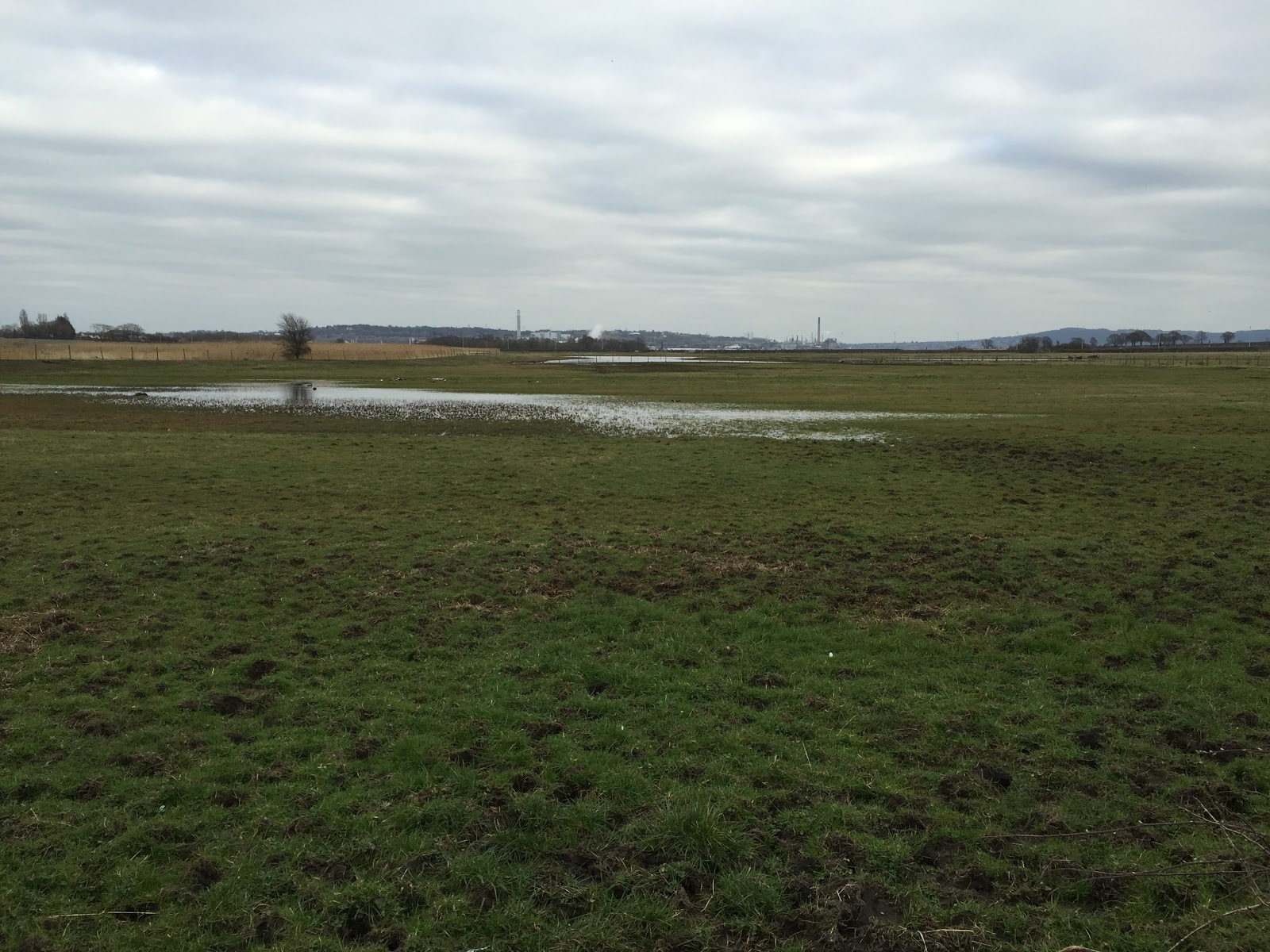
A brief stop along Carr Lane at the flooded fields and overlooking the Pools in the pre-downpour drizzle picked up a few Ruff, Black Tailed Godwit and Redshank. A few Teal and Shelduck were milling around with a single Little Egret, but with limited time I was unable to pick anything further up. The flooded field again held 3 pairs of Lapwing and a pair of Redshank.


A stop at Burnt Mill Farm produced at least 2 singing Corn Bunting which were being buffeted in the wind. A few Linnet and Goldfinch milled around at the edges of the paddocks, but there was sadly no sign of any Ring Ouzel yet; maybe a little early still. A Sparrowhawk struggled over, whilst a few Buzzard looked rather miserable; a complete opposite to the Friday's Spring like day.


A late evening return to the patch, and fortunately the rain had all but cleared, but it felt cold in the strengthening winds. A Buzzard sat on the fences at the edge of Pools had made everything decidedly edgy, and other than a couple of frisky Grey Partridge I couldn't pick much up from the Carr Lane side of the Pools. However the paddocks held 17 Meadow Pipit and 26 Pied Wagtail, but surprisingly not a single White Wagtail among them?! Surely there should be more moving through by now?


Moving around to the Town Lane side of the Pools was a lot more productive with 2 Little Ringed Plovers feeding in the far corner, 52 Black Tailed Godwit, 5 Ruff, 1 Ringed Plover, 12 Redshank and a single Snipe. A Greylag Goose had joined the Canada's on the Pools, a bit of a rarity on the Pools still. More Pied Wagtails were flooding in, but there were still no White's. I picked up 3 hirundines coming in from the South, which turned out to be my first Sand Martin's of the year.


Hale Marsh held a further 2 Little Ringed Plovers in the roadside pools, whilst a male Merlin shot through chasing a small passerine. The Cormorants are still nest building, and it will be interesting to see how many young a raised this year. 2015 was the first record of breeding on site (producing 18 young), and 2016 seems likely to beat that given the number of nests being built.


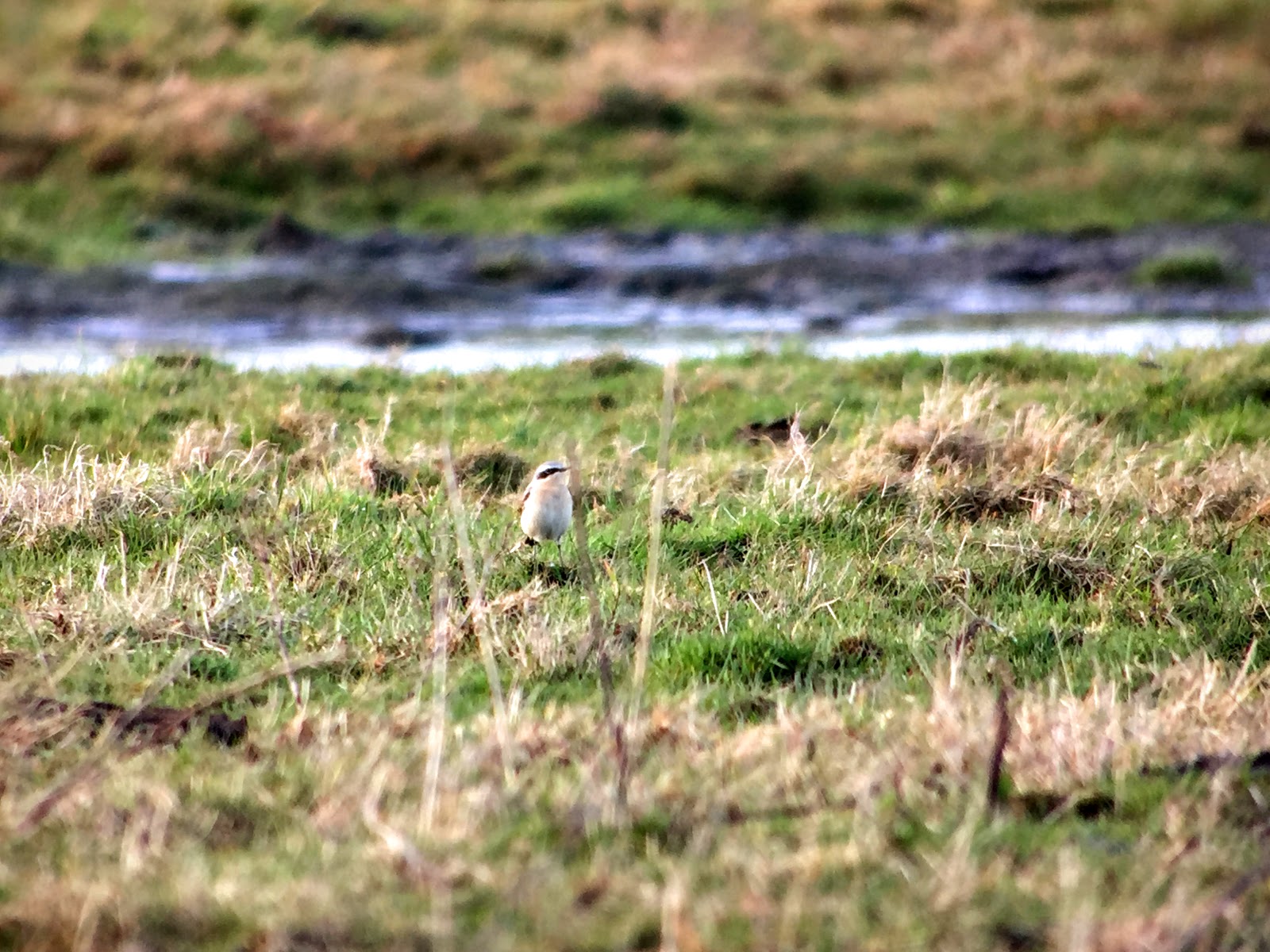
A quick scan of the Pools again produced no new waders, but a male Wheatear had appeared and gave some lovely views in the late evening sunshine. A Chiffchaff moved along the hedgerow by the Pools, whilst the Little Ringed Plovers had started to display. Spring is well and truly here, although maybe some slightly warmer weather would be nice!


Saturday, 26 March 2016

Patch Gulling - An Overview

So I started writing this post about a month ago.....but for some reason got distracted by proper birding!!

No birding for me today, but I thought it would be useful to write a post regarding Gulling on patch; especially in light of the recent White-Winger invasion and increase in birders turning up hoping to connect with them.


There are three distinct areas on the patch that I have concentrated my efforts on; Pickerings Pasture, Withins Way and Hale Lighthouse. Each site has it's own positives and negatives, and chances of finding or seeing decent Gulls are affected by a number of factors. I will attempt to discuss some of my findings below:

Arpley Tip

Probably the biggest factor that affects Gulling in the areas is Arpley Tip, which is open from Monday to Friday, and half day on Saturday (closing at 1.30pm). There is a direct correlation between Gull numbers on patch and the Tip being open and active. Arpley Tip is closed on a Sunday, and this clearly has an effect on Gull numbers and their associated behaviour. Any gatherings are normally smaller, and contain a lot less of the expected "big" Gulls, and the typical movement, and build-up of Gulls moving west along the Mersey pre-dusk does not occur until much later, quite often not until after sunset. It will be interesting to see what effect the closure of Arpley Tip in 2017 will make to the Gull numbers in this section of the Mersey.


Richmond Bank/Moore and the Lower Mersey

Interestingly it has become apparent (unsurprisingly) that many of the Gulls using the Mersey to roost have originated from Richmond Bank and Moore with the same 3rd winter Iceland Gull, leucistic Black Headed Gull and a partial leucistic Lesser Black Backed Gull being seen at both sites. It is likely that some of the other Gulls that have appeared on patch have also originated from these sites. It is a fair assumption that if birds are reported from further up the Mersey, then they will likely roost in the Upper Mersey off Hale at some point.


Tide Height

Other than Pickerings Pasture, where Gulls will often congregate throughout the day, tide height is a major factor in determining whether you will get good views of Gulls.


Wind

The wind strength and direction can play a major effect on the evening Gull movement. Light winds result in Gulls moving through at various heights and from all directions, which makes sifting through them very difficult. Strong winds push the Gulls lower and they will often stream through the narrows (the closest points between Hale and Frodsham) at a consistent eye-level; this provides the best chance of picking something out. Wind direction is generally best for viewing from Hale when it has some Southerly in it, as it pushes the Gulls closer to the Hale side. In general winds from the North push the Gulls to the Frodsham side of the Mersey.


Light

Given that the best time for Gull movements is from about 2 hours before dusk (but with generally the biggest movements occurring between an hour before dusk), it is essential that you have bright conditions, but preferably not too sunny. Viewing east from Hale Lighthouse is generally best as you have a good field of view to scan from and have a good opportunity to identify Gulls before they head into the setting sun/poor light to the west. The lights from the industrial estate at Pickerings Pasture allows you a bit of "extra" time for Gulling, but will be very dependant on where the Gulls are roosting.


Conclusion

In conclusion if you intend to visit the Hale area for Gulls the ideal conditions are 2 hours pre-dusk, with mid-strength winds and high tide 3 hours prior to dusk.......oh, and avoid a Sunday!!


Friday, 25 March 2016

Spring has Sprung

Another stunning early Spring day with largely unbroken blue sky and warm sunshine, although the South Westerly winds still had a little bite to it. The signs looked promising for some early migrants, but after a number of failed attempts recently maybe my expectation levels weren't quite as high.


Starting at Burnt Mill Farm again I was rewarded with at least 3 singing Corn Bunting, along with a number of groups of Linnets. Raptors were again very much in evidence and a scan of the surrounding area produced at least 15 Buzzards, 3 Sparrowhawk and a Kestrel. The Buzzards and Sparrowhawk were clearly enjoying the sunshine, producing some stunning displays. I failed to locate the large mixed finch flock at Great Boar Wood, reported on the 22nd, but a small number of Goldfinch fed quietly in the treetops.


The flooded fields again held 6 Lapwing and 2 Little Grebe (which were very vocal again) but little else. Turning my attentions to Carr Lane Pools a quick scan revealed 2 Ruffs, 30+ Black Tailed Godwit and a Green Sandpiper, great to see some early passage waders already on the move. I moved around to view the Pools from Town Lane, with the sun making viewing rather difficult from Carr Lane.


The light was much better and allowed for a proper count of Black Tailed Godwit (48 - but no colour ringed birds) and to find a further couple of Ruff, taking todays total to 4. A couple of Little Egrets stalked the far edges of the Pools, but a thorough scan failed to reveal the hoped for migrants. Duck numbers are slowly dropping, but there are still 84 Teal, 7 Gadwall and loads of Shelduck.


The flooded fields between Carr Lane Pools and Hale Marsh held plenty of ducks, but nothing of great interest. Hale Marsh was full of Meadow Pipit and Skylark, and a couple of smart Little Egret in full breeding dress, but there was still no sign of any migrants. After a bit of scanning across the marsh I eventually picked out a Whimbrel, close enough to be a Spring migrant. Walking back to Carr Lane Pools I bumped into Chris Tynan, but other than a few more Sparrowhawk we failed to pick out anything further.


The walk down Within Way was fairly uneventful,with a single yelping Little Owl in the first copse and a few Buzzard overhead. Continual scanning of the ploughed fields failed to pick up any migrants, but reaching the end of Within Way I finally picked out two male Wheatears. This is a favoured spot for the Wheatears, and so it proved today, and finally my first "true" migrant of the year. I spent quite a while scanning Runcorn Hill and the hills behind Frodsham picking out a single Marsh Harrier, 20+ Buzzard, 2 Peregrine and 3 Sparrowhawk, but sadly nothing better.


A quick look back in at Carr Lane Pools found 5 freshly arrived Golden Plover in and an additional Ruff, although there was now no further sign of the Green Sandpiper. Spurred on by the new arrivals I decided to have another quick look at Hale Marsh, and sure enough there was a Little Ringed Plover fresh in, my second "proper" migrant of the day. It also serves as a reminder that at this time of year birds can drop in at any time and move on just as quickly.....hopefully if that mega arrives it'll stay longer!!


So three new year ticks, and I'm suddenly up to 133, miles ahead of this time last year. With April just around the corner, I can't wait for the full rush of summer migrants.


Sunday, 20 March 2016

Let's Go Fly a Kite

It felt a lot more Spring-like today with warm sunshine and plenty of blue sky, although the north-westerly still made it cold at times. With a small passage of Meadow Pipit and a couple of Buzzards over my house, all of the signs looked good for a visit to the patch.


Arriving at Burnt Mill Farm there were already a good number of Buzzard on the wing, many slow wing-beating and stooping. I spent a good half hour scanning for raptors and had a minimum count of 19 Buzzard, 3 Sparrowhawk, 4 Kestrel and a Peregrine. It really felt like a good day for an Osprey, but nothing materialised. A slightly funny "Corn Bunting" singing from the tall trees by the farm, had me scanning for a good while before I realised that it was a Starling mimicking! Certainly the first time that I have heard Starling mimicking Corn Bunting; sadly I didn't manage to pick up any "real" birds again.


The flooded fields on Carr Lane held a pair of Lapwing and 3 Redshank, which were scattered by a male Merlin dashing through. It perched up briefly before pursuing a female Merlin that was zooming around the back field; and a further female/immature bird was also found perched up in the trees. The Little Grebes were again making a racket from deeper cover, whilst the reeds were full of Reed Bunting. Great Boar Wood again held a Nuthatch, whilst at least two Great Spotted Woodpecker were drumming away.


Carr Lane Pools were quiet again, but held a single Little Egret, 11 Black tailed Godwit, 2 Snipe, and the usual selection of Teal and Shelduck. The mewing of Buzzards was constantly in the air, whilst I watched a Merlin (one of the Carr Lane birds?) hunting Snipe on the edge of Hale Marsh, the Merlin only failing to catch one after some particularly good manoeuvres by the Snipe. Hale Marsh was full of the sound of displaying Meadow Pipit and Skylark, but otherwise it was another Wheatear-less landscape. A further Peregrine and 9 Buzzard were soaring around, including the Rough-leg look-a-like which had gone missing for most of the winter.


Within Way produced some more Buzzards, and two yelping Little Owl from two different locations - promising some more breeding birds on patch this year fingers crossed. Ravens had joined the raptors on the thermals, having made the short journey across the river from Frodsham. The recently ploughed fields were being propagated, meaning any chance of a Wheatear was going to be remote, and the rest of the walk down to the end of Within Way was quiet.


The rocks at the end of Within Way held 37 Wigeon and 12 Gadwall, both quite high counts for this area of the patch. Waders were in short supply but Curlew, Black tailed Godwit, Redshank and Oystercatchers were evident. Walking along the shore to the Lighthouse failed to pick up anything more than a few Linnet, Reed Bunting, Skylarks and a single Rock Pipit. A female Marsh Harrier was scoped distantly over Frodsham, whilst Buzzards still seemed to be everywhere. A little disappointed I started to head back, but had one last look from the end of Within Way. Scanning Runcorn Hill I picked up a gull-like raptor, and as it banked I could see a clear fork - a Red Kite. It continued it's way east along Runcorn Hill, although trying to get a distant shot proved difficult (as proved below!) Although I have seen many already this year on the trains to London it was great to see one on the patch again.


The recently seeded fields on the way back up Within Way were suddenly alive with birds, with about 70+ Fieldfare, 400 Starling, 50 Stock Dove, Skylarks, Linnets and Greenfinch, all jostling for position among the corvids.


A brief stop at Carr Lane on the drive home failed to add anything further, but the Buzzards were still enjoying the thermals. So another day with no migrants, but Red Kite was my 130th bird on patch this year, so not all bad.


Saturday, 19 March 2016

For today, read yesterday!

It was again cool, with overcast skies. Where have the sunny days of Spring gone from last week? Today's visit was again a multi-tasking event, with a few stops along the way!


A brief stop by Burnt Mill Farm again failed to reveal any Corn Buntings, but then the weather probably wasn't encouraging. A Sparrowhawk raced through, whilst a few Grey Partridge lurked close to the hedgerows.


The Green Sandpiper was nowhere to be seen on the flooded field, but a couple of Little Grebe yaffled from the reedy areas. Carr Lane Pools held a Little Egret, 5 Snipe, and the same selection of ducks as yesterday (Teal, Gadwall, Shoveler and Shelduck). The Black tailed Godwit had disappeared, whilst Redshank numbers were down; but still no sign of any Little Ringed Plovers yet.
 
3 Buzzards were displaying over the carpark at Hale Park; whilst a Kestrel was soaring over Icehouse Wood. I had forgotten about the Saturday Football at the Park, which unsurprisingly meant that yesterdays Thrushes had all vanished. However the Greenfinches and Goldfinches remained in the surrounding trees, and 3 Siskin flew overhead. A few Nuthatch were again bubbling away from different areas of the Park, but otherwise it was quiet.


Hale Marsh held 3 Little Egret, and the ever increasing swam of Canada Geese. The Peregrine had already taken up it's position on the edge of the decoy making the nearby Woodpigeon and Stock Dove quite edgy. The drier sections of the Marsh look perfect for the first Wheatears, but alas there was no sign yet.


The flooded field between Town Lane and Carr Lane Pools, is starting to look better and better, and the birds are starting to become accustomed to the passing traffic. 2 Dunlin were lurking among 5 Black tailed Godwit, whilst there were 84 Teal and 12 Shelduck. There is plenty of decent looking habitat around at the moment, I just hope that water levels survive long enough to allow the passage waders to take advantage of them. Still no "true" migrants on patch (I don't count Chiffchaff or Blackcap!), maybe tomorrow.


Friday, 18 March 2016

Multitasking Patching

Well clearly Spring isn't quite here just yet; 5 degrees and overcast conditions and it felt as though we had been plunged back into winter. Todays patch visit wasn't a birding trip (taking the kids to the playground at Hale Park), but it would be rude to be on patch without having a brief look around.

We stopped briefly on Carr Lane to feed the horses, which also happens to be the prime place to scope Carr Lane Pools.....fortunate!! Before I even had chance to get my scope out I flushed a Green Sandpiper from the flooded field on the opposite side of the road, an unexpected bonus. The Pools held pretty much the same selection as yesterday, but Black tailed Godwit numbers were down to 5, but Redshank numbers were up. A single Shoveler and 5 Gadwall were milling about the Teal and Shelduck. Having run out of apples and the horses starting to lose interest we carried on to Hale Park.


Hale Park has an excellent playground, which is surrounded by the Icehouse Woods, Horse Paddocks and farmland, and has a really decent selection of birds. The Park was alive with birds today, who despite the weather clearly realise it is Spring. A flock of c.60 Redwing greeted me at the car park (they are clearly still moving through patch then!), whilst a number of resident Thrushes fed on the parkland (Mistle, Song and Blackbird). The trees were full of finches including Goldfinch, Greenfinch and a single Lesser Redpoll. Nuthatches bubbled from virtually every tree, including one bird that came down to investigate one of the benches in the playground.

 
The calls of Goldcrest, Treecreeper, drumming Great Spotted Woodpecker and a single singing Chiffchaff also filled the air. A Sparrowhawk drifted over, whilst a Kestrel bombed about the open area of the park. The birds had clearly not been put off by the colder weather.
 
 
A brief stop at the bridge on Town Lane to scan Hale Marsh resulted in my first Kingfisher for a while. 5 Little Egret were again stalking the marsh, whilst the Cormorants continued with their nest building. A couple of Buzzards sat on the edge of the decoy, whilst there was also a high count of about 60 Stock Dove. A Grey Wagtail flew over towards Carr Lane Pools, but otherwise it was quiet. Still no sign of any migrants, but with plenty on the move just a little further south it shouldn't be too long.


Thursday, 17 March 2016

Good things come to those that wait......sadly not today!!

A gorgeous spring-like St Patricks Day, with unbroken blue sky, light winds and warm sunshine; a perfect day to have been on patch for a raptor or two. Sadly I was unable to get out until after work, so any hope was quickly wiped out; but I was confident that the weather may have tempted a migrant onto patch.


Carr Lane Pools and the flooded fields looked good, and held 9 Black tailed Godwit, 8 Snipe, Little Egret, 78 Teal, 4 Gadwall and a couple of Grey Partridge. Great Boar Wood was alive with bird song and a Nuthatch was bubbling away, the first in this section of the patch for well over a year. The flooded field is looking really good, I'm just keeping my fingers crossed that the water level stays for another month or two.


Hale Marsh was relatively quiet, and didn't hold the hoped for Wheatear. However the Peregrine was sat on the edge of the decoy, looking slightly happier with the spring weather. The Cormorants are in the full swing of nest building, and it looks like it could be a bumper year. 4 Little Egret stalked various sections of the marsh, whilst the Canada Geese appear to be pairing up already. The marsh is looking good, and it shouldn't be too long until the first Little Ringed Plovers are in.


Moving round to Hale Lighthouse the fields were full of Grey Partridge (at least 11 pairs seen), Skylark, Yellowhammer and Reed Bunting enjoying the early evening sunshine. 32 Curlew were feeding in the recently ploughed field, but the recent Brambling were nowhere to be seen. A Merlin shot through scattering a few Linnets, Pied Wagtails and Meadow Pipit.
 
 
A quick scan of Frodsham Score revealed a few Raven tumbling around, but little else. There was no sign of the Swan herd, and it would appear likely that they have already started their journey northwards (possibly the birds I saw on the Mersey on Sunday). Settling back onto my bench I got back Gulling fix for the night, however it was far from easy. The rising tide, lack of wind and substantial section of exposed mud by the Weaver Sluice meant that the gulls were streaming through at a variety of heights and distances. The exposed mud also meant that many of the Gulls decided to stop well short of my position at Hale Lighthouse. Nevertheless I managed to pick up an adult and 1st winter Iceland Gull in quick succession, both of which decided to stop their journey west at the Weaver Sluice. 
 
 
I failed to find anything further of interest despite a decent look through the Gulls moving west. With the light failing and the majority of Gulls now deciding to follow the Frodsham side of the Mersey I decided to head home. A brief stop at Carr Lane produced a calling Little Grebe, but nothing further. It looks like I'll have to wait a couple more days for that first Spring migrant.