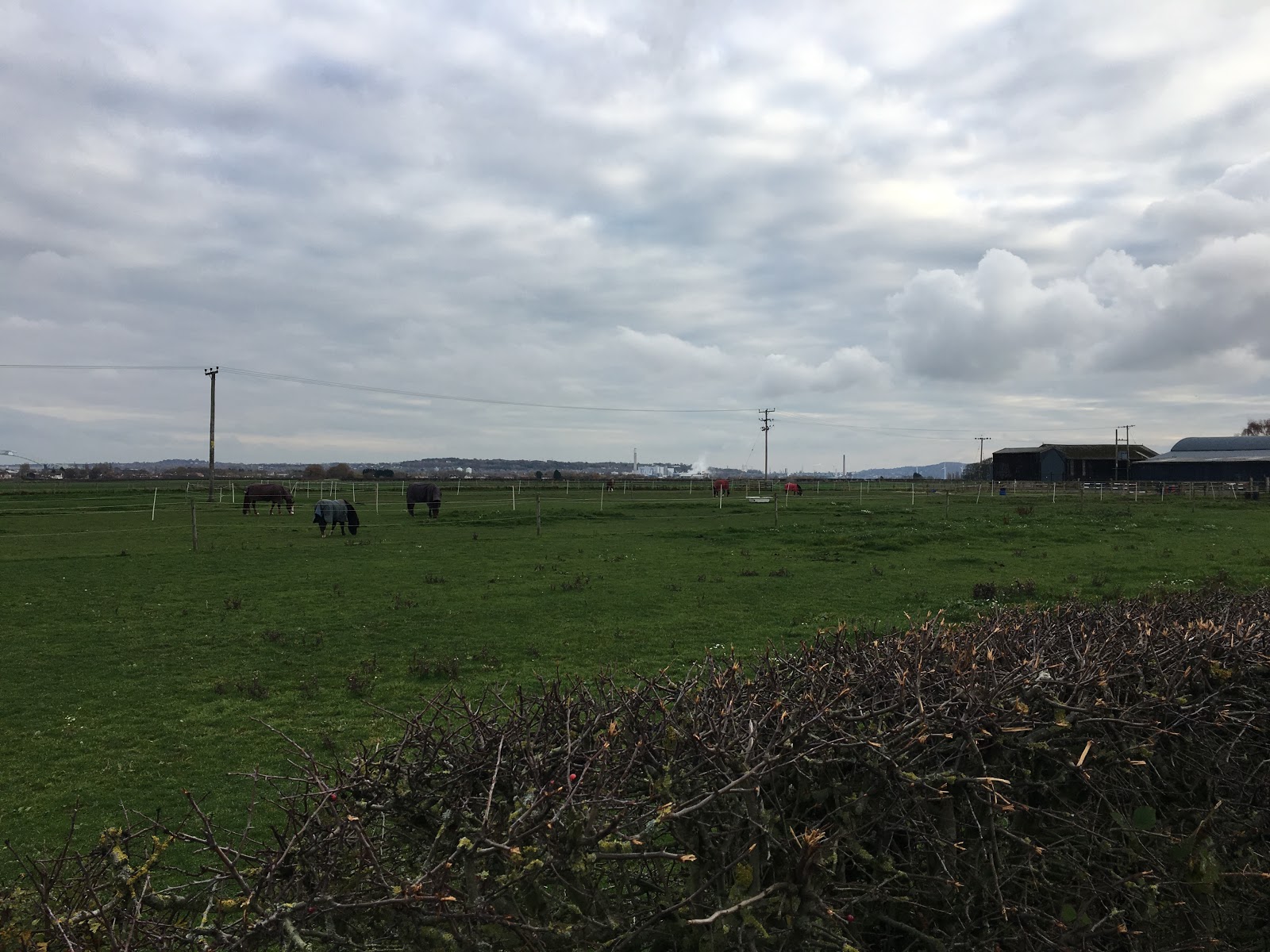
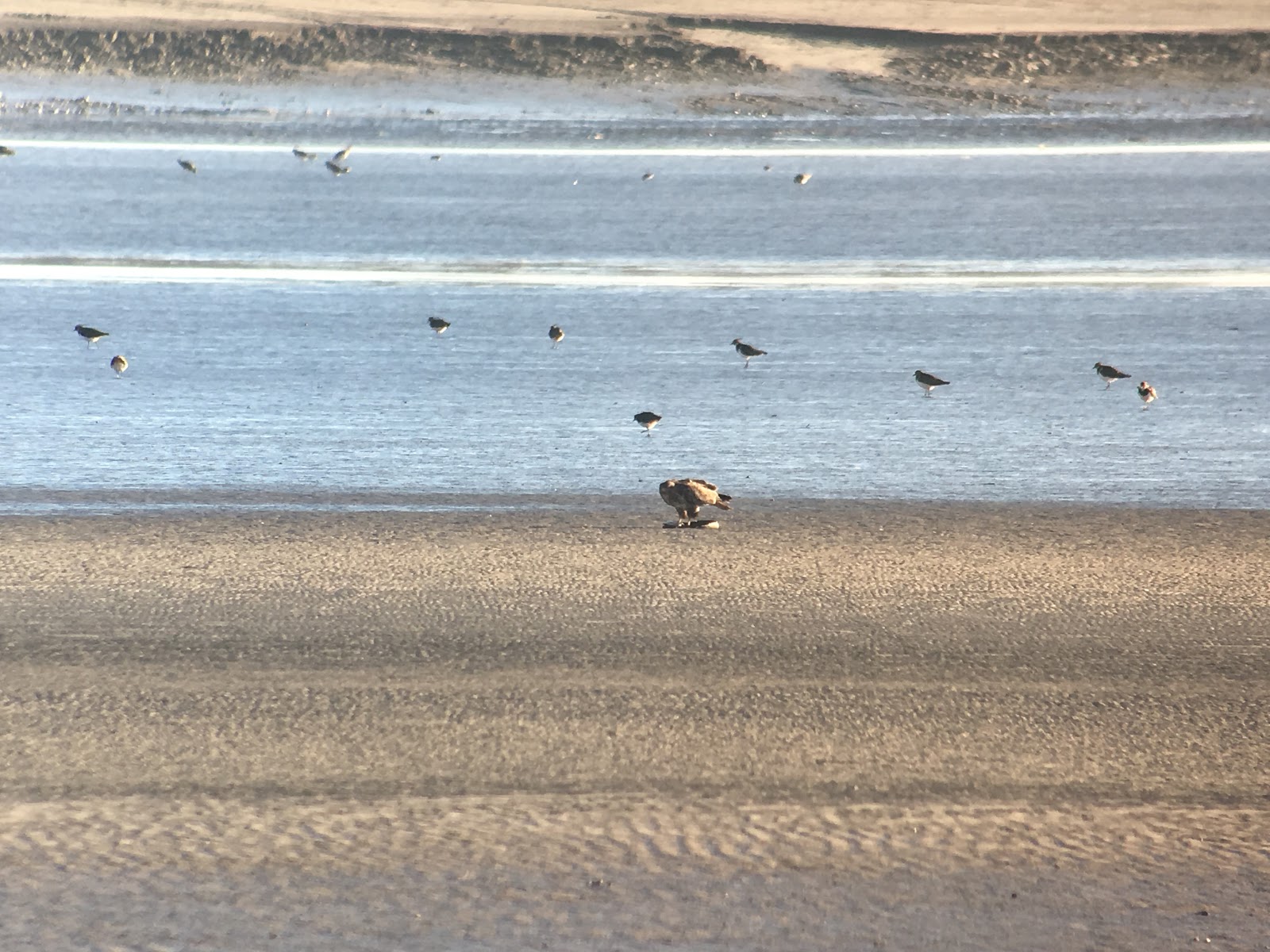
So 2018 saw me enter into my fourth year of the Patchwork Challenge. Each of the preceding years had seen an increase in the number of species seen within the Patch boundaries, so I knew it was always going to be a challenge to maintain the pace. The house move that had restricted my patch activity towards the end of 2017 continued much further into 2018 than I had planned or anticipated (the joys of buying a house that requires a substantial amount of work!). But despite a slow start to the year I managed to visit the Patch on 115 occasions (an increase on 2017). However 2018 was a very tough year for birding, with a slow Spring, an even slower Autumn and some unbelievably warm, drought like conditions that decimated the Pools. In total I managed to see 170 species (my lowest total by 10 species of taking part in Patchwork Challenge), however I did manage to add two Patch lifers (Nightingale and American Golden Plover).
January
Patch visits - 2
Patch lifers - 0
Patch Yearlist - 92 (xxx points)
The house move that curtailed the back end of 2017 continued into 2018, and the subsequent (extensive) work required to get it to a liveable standard meant that any birding went out of the window for the majority of the month. I finally was able to get the yearlist up and running on the 26th with a late afternoon scoot around the patch. Although nothing overly unexpected was seen it was nice to add Goosander, Common Sandpiper, Jack Snipe and Merlin alongside some of the more expected species. I was back out on the 28th cleaning up on some of the woodland birds around Hale Park before heading to Hale Lighthouse for my first Gulling of the new year. Iceland Gull, Short eared Owl, Brent Goose were quickly added (the latter species a scarce patch bird) and ensured that the month wasn't a total washout.
 |
| Iceland Gull - Hale Lighthouse |
 |
| Eurasian Teal - Town Lane |
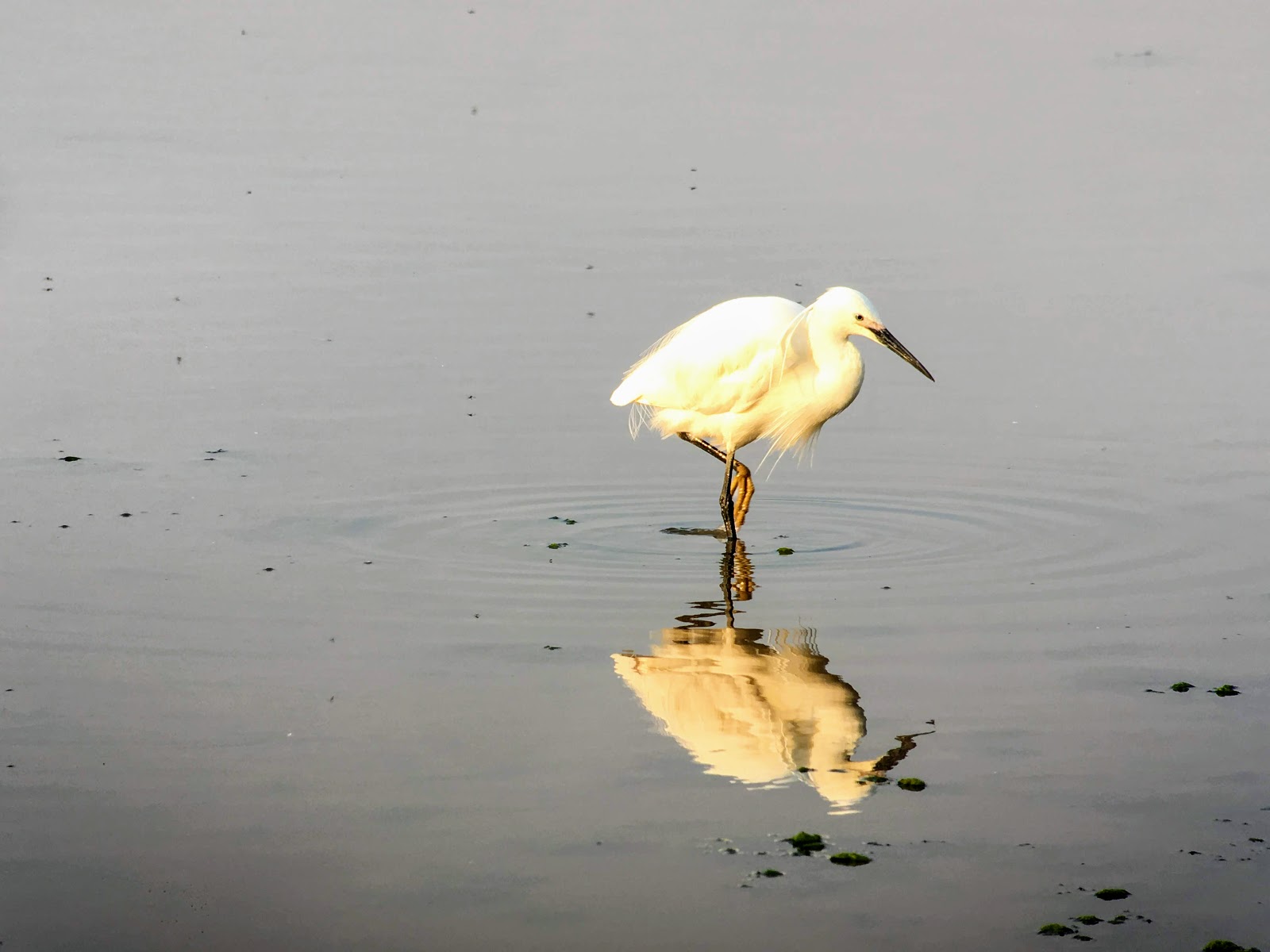 |
| Little Egret - Pickerings Pasture |
February
Patch visits - 1
Patch lifers - 0
Patch Yearlist - 99 (xxx points)
The house had pretty much taken over my life, but with the final touches of decorating completed I was finally able to move in on the 20th. However the impact on my patch birding was massive, and I only managed one visit on the 25th, however it proved rather very productive filling a few of glaring gaps from my yearlist alongside some quality patch species Ruff, Glaucous Gull, Spotted Redshank. It was also nice to catch up with some of the scarcer wintering species again including Iceland Gull, Goosander and Common Sandpiper. So despite a lack of birding, it was still only the end of February and with lighter evenings on the horizon I was in a fairly positive mood to kick on for the year.
 |
| Mistle Thrush - Church Lane |
 |
| Kingfisher - Pickerings Pasture |
 |
| Wren - Carr Lane (c/o Mike Roberts) |
March
Patch visits - 9
Patch lifers - 0
Patch Yearlist - 120 (xxx points)
March was bitterly cold with the Beast from the East doing it's best to remind us that winter was still very much in charge. The 4th produced my first Brambling of the year, whilst I managed to locate the Glaucous Gull (that had been seen near to Runcorn) at Pickerings. The same day also produced some further Iceland Gull and 2 Goldeneye (a fairly scarce patch bird). The 8th saw me add 2 Red breasted Merganser, alongside some good winter waders (Bar tailed Godwit and Knot) and another Iceland Gull. The 10th produced both white wingers again alongside an impressive murmeration of c.25,000 Starling. As the full brunt of the Beast from the East hit on the 17th a further Iceland Gull was seen from Hale Lighthouse. The 25th finally saw my first "migrant" of the year in the shape of a White Wagtail, and a Green Sandpiper on the former Ibis Pool. The slight increase in temperatures also finally saw some singing Chiffchaff and Blackcap around the patch. Scanning Frodsham Score on the 25th also paid dividends with 3 Whooper Swan flying around. The month ended with some birding on the 31st adding 2 Little Stint (that had been overwintering) at Pickerings Woodcock and a Common Scoter. Despite heading into April, there was a real lack of migrants about, with blocking northerlies keeping everything well away from the north-west.
 |
| Fieldfare - Pickerings Pasture (c/o Mike Roberts) |
 |
| Water Pipit - Carr Lane Pools |
 |
| Glaucous Gull - Pickerings Pasture (c/o Mike Roberts) |
April
Patch visits - 20
Patch lifers - 0
Patch Yearlist - 149 (171 points)
So into what should be one of the best months of the year for migrants on the patch, but the majority of birds seemed to be at least 1-2 weeks later than normal. The 1st saw me add Pochard to the yearlist, but otherwise there was still a real wintery feel although the Water Pipits were trying their best to feel a little more amorous by moulting into their breeding plumage. The 3rd finally saw my first Wheatear of the year, but with the rather cold weather lingering on they looked distinctly non-plussed. The 5th saw my first Garganey of the year, whilst 2 Bewick's Swan were rather useful additions on Ince Marshes. The 7th finally saw a few more migrants about, including my first Willow Warblers and Swallow of the year. Red legged Partridge and Barn Owl were also nice to finally catch up with. The 8th was a bit of a pea souper, but produced 2 Tree Pipit and a few more migrants, alongside the first returning Avocet of the year. The 11th saw the first Redstart of the year along Carr Lane, whilst the 12th produced the first Sedge and Reed Warblers of the year. The 13th was the first productive day of the Spring with Ring Ouzel alongside the remaining Redstart, and a clear increase in migrant numbers. The14th saw an increase in Wagtail numbers with the first returning Yellow Wagtails on Hale Marsh, alongside c.70 White Wagtail. Mid month was fairly slow, but by the 19th things were starting to pick up a little (along with the temperatures!), including my first Grasshopper Warbler of the year. The 21st was probably the best 'migrant' day of the month with the first returning Channel Wagtails, Lesser Whitethroat, Whimbrel and Greenshank (along with plenty of other migrants including Grasshopper Warbler, Redstarts and Ring Ouzel). A few quieter and greyer days were followed by the first big influx of Wheatear and Cuckoo on the 24th. The 25th saw Wheatear numbers peak at c.30 birds, and a very smart Whinchat was tagging along for the ride at Burnt Mill Farm. The 25th also saw my largest patch count of 7 Ring necked Parakeet flying towards Halebank. The 28th saw my first returning Swift of the year, but also saw a drop off in migrant numbers. The 29th produced my last yeartick of the month, with a smart Hobby swooping across Carr Lane. Despite a smattering of migrants, it still felt that Spring hadn't really got started, and despite lots of effort I just didn't seem to be getting any luck.
 |
| Common Redstart - Carr Lane (c/o Mike Roberts) |
 |
| Corn Bunting - Burnt Mill Farm (c/o Mike Roberts) |
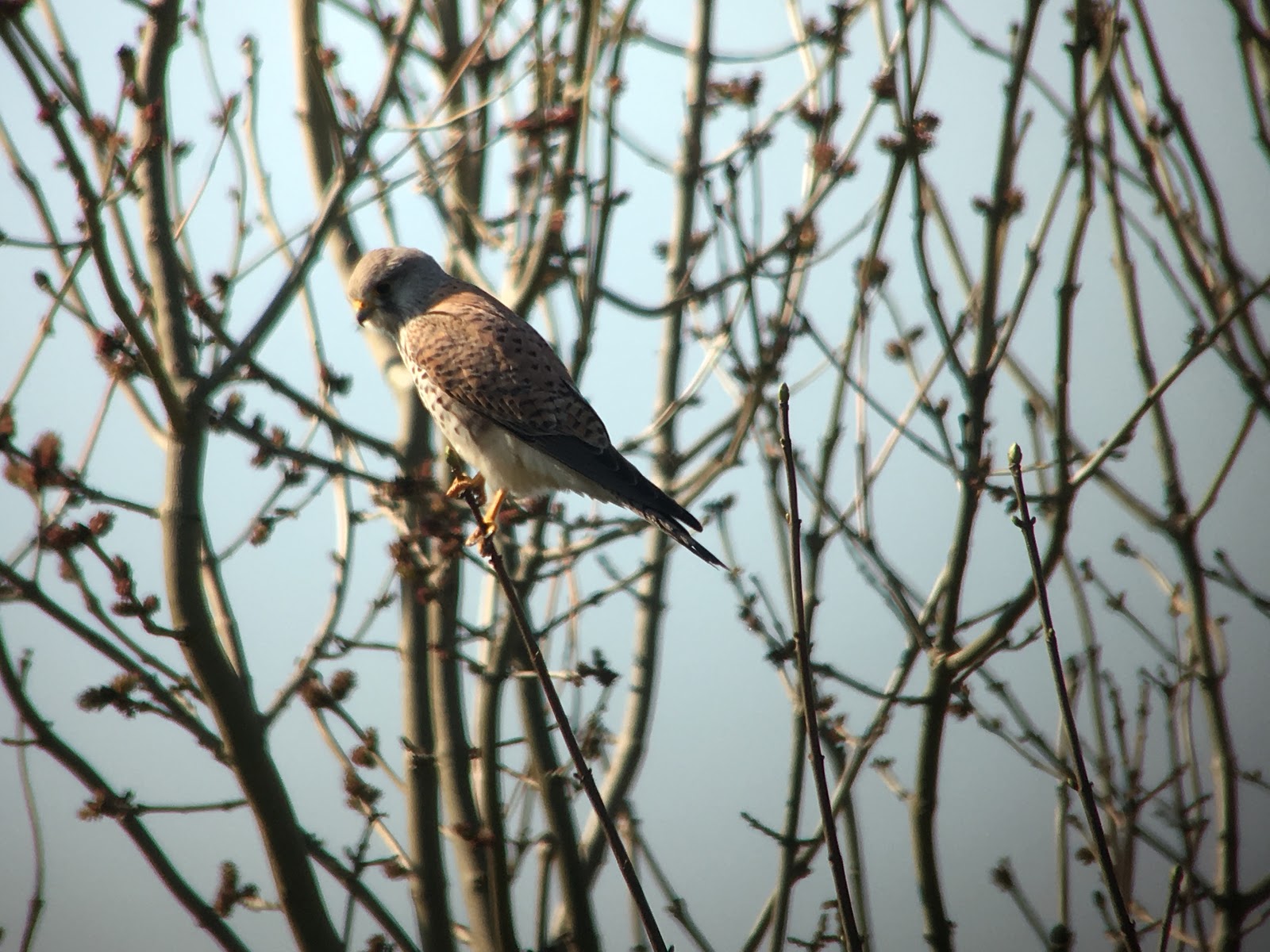 |
| Kestrel - Within Way |
May
Patch visits - 17
Patch lifers - 1 (Nightingale)
Patch Yearlist - 160 (189 points)
Surely May (ordinarily the best month on patch) would produce the goods...…..The first couple of days of the month continued in the same vein as the majority of April, with only a smattering of migrants. However the 4th produced a brief moment of excitement with Pied Flycatcher, another Redstart and 2 Whinchat around Carr Lane in the space of about 15 minutes. Yet another early start on the 5th produced what would ultimately be one of my highlights of the year. Arriving at the bridge on Carr Lane, I had just poured myself a coffee, when I suddenly heard a song that I was very familiar with (having grown up with them nesting in my family garden)…..a Nightingale. Quite possibly my favourite songbird, and one that always takes me back to why I connected with birds at such an early age. The next couple of visits were painfully slow until the 13th produced yet another Whinchat and a slightly more unseasonal Tree Sparrow. The 19th saw my first Spotted Flycatcher of the year, but it wasn't until the 21st that wader migration saw any marginal upturn with the first Sanderling of the year. The 26th finally saw a good days birding! Wood Sandpiper was a very late first of the year along Town Lane. Twitter was starting to go a bit crazy with groups of Terns moving a couple of miles up the Mersey, so I swiftly made my way to Hale Lighthouse. Wader numbers were well up with at least 57 Sanderling and first Curlew Sandpiper of the year, however the Terns seemed to take an eternity to arrive, but finally I added c.50 Arctic Tern, Sandwich Tern and a couple of Common Tern. To top off the day I was delighted to see an Osprey heading over towards Hale Marsh....now THAT is what Spring should be about!! I ended the month dipping a Quail on a couple of attempts, but adding Tawny Owl to the year list at Hale Park. So not quite the May I was hoping for, either in terms of migrant numbers of scarcity, but still some exciting moments.
 |
| Skylark - Within Way |
 |
| Whinchat - Burnt Mill Farm (c/o Mike Roberts) |
 |
| Sanderling - Hale Lighthouse |
June
Patch visits - 6
Patch lifers - 0
Patch Yearlist - 162 (193 points)
Into June, which can be quiet at the best of times, and sadly 2018 was not to be much different. A distant Red Kite on the 2nd was a bonus, as was a singing Cuckoo (my second of the year) from Hale Decoy. The UK Rosy Starling invasion coincided with one of the hottest and driest spells for the UK, and despite a lot of checking of the Starling populations around patch I failed to find one (which made the late news that a stunning adult was present on the 9th even more annoying). The 9th did produce my first Little Gull of the year, along with some more Common Tern. The remainder of the month was very poor with only small high tide roosts on Hale Marsh (despite some decent tides). Carr Lane Pools looked in desperate need of some rain and had all but disappeared by the end of the month, which meant that going into the start of the wader migration months my hopes of finding anything decent were severely reduced.
 |
| Great Spotted Woodpecker - Hale Park (c/o Mike Roberts) |
 |
| Eurasian Swift - Carr Lane Pools (c/o Mike Roberts) |
 |
| Yellow Wagtail - Within Way |
July
Patch visits - 11
Patch lifers - 0
Patch Yearlist - 164 (195 points)
The start of the month saw me "twitching" the pair of Egyptian Geese on Hale Marsh....yes, it had really got to that stage! Despite the drought like conditions on Carr Lane Pools, I'm lucky that I still have the Mersey to fall back to. The 8th saw the first returning waders including Greenshank and Common Sandpipers. A female Garganey flying over the Mersey was a surprise (but sadly only my 2nd of the year). The 14th produced 3 Crossbill flying over Pickerings Pasture (strangely June/July seems to be the best time of year to catch up with them on patch - and presumably indicates post breeding dispersal?). The middle of the month was pretty slow going, although it was nice to see my first returning juvenile Yellow Legged Gull. The 22nd also produced 2 singing Garden Warbler at Pickerings, a strange record, making me wonder whether I had just overlooked them earlier in the year. My 2nd Spotted Flycatcher of the year on the 22nd was nice to see. Wader passage started to increase on the Mersey on the 28th with a Whimbrel, Bar tailed Godwit and Turnstone starting to move - whilst I also caught up with the dodgy Ruddy Shelduck (although it was unringed, fully winged and exceedingly wary...….!! Haha). A few final visits to the patch didn't really see much on the move, but it was nice to see a couple of the local juvenile Peregrines playing about over the Mersey and surrounding patch.
 |
| Peregrine - Pickerings Pasture (c/o Mike Roberts) |
 |
| Egyptian Goose - Hale Marsh |
 |
| Great White Egret - Hale Decoy |
August
Patch visits - 10
Patch lifers - 0
Patch Yearlist - 165 (197 points)
The prolonged dry spell had dried the entire patch out, making it look more like the Spanish Steppes rather than a quiet corner in the north west of England. The month started well with a juvenile Caspian Gull (a plumage tick, with most birds that I have seen being more advanced 1st winters) on the 2nd, whilst Yellow legged Gulls also started to turn up in the gulls at Pickerings during the month. Small numbers of waders started to move through with Whimbrel and Common Sandpiper (including a monster 17 on the 9th at Pickerings) much in evidence in the first couple of weeks, whilst the first returning Curlew Sandpiper appeared on the 11th. There was also some evidence of passerine migration with Tree Pipits moving and the first Whinchat of the autumn. Unfortunately my months birding was prematurely ended on the 18th when I returned to my car to find someone had crashed into it (damaging the side, rear bumper and breaking the suspension.....needless to say it was written off!) and had not even bothered to leave a note. I suppose the only positive was that it wasn't slap bang in the middle of Spring or Autumn!!
 |
| Common Sandpiper - Pickerings Pasture |
 |
| Yellow Legged Gull - Pickerings Pasture (c/o Mike Roberts) |
 |
| Caspian Gull - Pickerings Pasture |
September
Patch visits - 11
Patch lifers - 0
Patch Yearlist - 165 (197 points)
A family holiday to Pembrokeshire and finally buying a new car, meant that I wasn't able to get out onto the patch until the 9th. However I was treated to 4 Hobby that lingered along Higher Road, and afforded great views. An early returning Merlin was also a surprise on the 9th. Some rain also meant that the Pools were looking a little better (although well short of what they ordinarily would be) whilst the roosts were also slowly improving with Curlew Sandpiper, Little Stint, Greenshank, Ruff, Green Sandpiper starting to appear amongst the increasing numbers of Dunlin and Ringed Plover. My first Barn Owl in quite some time was a nice surprise on the 12th (and was joined by a second bird for the majority of the winter). By mid-month the first returning wintering species such as Wigeon and Rock Pipit were already starting to turn up. A juvenile Black Tern from Hale Lighthouse on the 18th was a surprise, although there seemed to be plenty moving about elsewhere. Wader migration picked up further from the 20th, and provided probably one of my most frustrating incidents of the year. I picked up an interesting long-winged Peep, but as I tried to move to get better views flushed the whole flock. Despite trying to relocate it I failed, and it will have to join the "one that got away" pile. Storm Bronagh on the 21st failed to deliver much other than a Arctic Skua, Kittiwake and a Goosander (a far cry from the wind blown seabirds last year). A break away to Spurn meant that I only squeezed in one more visit on the 30th, which was fairly uneventful. A pretty poor September (yet again), lets hope that 2019 delivers some proper autumnal birding!
 |
| Whimbrel - Hale Shore (c/o Mike Roberts) |
 |
| Eurasian Hobby - Higher Lane (c/o Mike Roberts) |
 |
| Eurasian Wheatear - Burnt Mill Farm |
October
Patch visits - 8
Patch lifers - 1 (American Golden Plover)
Patch Yearlist - 167 (208 points)
October carried on in the same vein as September, and working the patch became increasingly frustrating. 5 Rook (a scarce patch species) on the 14th were pretty much the only birds of mention in a very slow period. I was unable to get out when the first wave of Yellow browed Warblers finally turned up at Hale, and I missed out on a few decent vizmig sessions too. However finally on the 20th after a few failed visits I found a silent bird (clearly trying to sneak through) in a mixed flock at Pickerings Pasture. The 25th produced probably my scarcest species of the year, when I found an American Golden Plover at Pickerings. Having spent hours over the last 5-6 years checking the Golden Plover flocks it felt like just reward. The first returning Water Pipits of the winter turned up from the 26th, with numbers slowly increasing during the winter period. By the end of the month the species were turning increasingly wintery, however a very late Yellow Wagtail on the 28th was a big surprise. The month ended with 3 Mute Swan turning up at Town Lane, a rare sight on this side of the Mersey (although commonly seen on Frodsham Score/Ince Marshes).
 |
| Common Buzzard - Hale Marsh (c/o Mike Roberts) |
 |
| Pink footed Geese - Church Lane |
 |
| Sparrowhawk - Within Way |
November
Patch visits - 12
Patch lifers - 0
Patch Yearlist - 170 (218 points)
Wader numbers were still good at Pickerings at the start of the month, but my attentions were slowly turning towards the evening roosts on Hale Decoy. The 3rd provided one oft the most exciting roosts I have seen with a Cattle Egret, 7 Great White Egret, 17 Little Egret complimenting the raptors (including Hen Herrier, Merlin and Peregrine) and owls (Short Eared, Barn and Little). The 4th produced my second frustrating Peep of the year, this time at Pickerings. The plumage and some structural features didn't seem to fit Little (although it didn't seem to fit many other Peeps either), and the call sounded more Semi-palmated (although the features didn't seem to fit). Sadly a Peregrine flushed everything and I was unable to relocate it on further visits, so yet another sitting in the possible "one that got away" pile. A post Pied Wheatear twitch visit to the patch on the 9th produced a very smart 1st winter Caspian Gull (my second of the year, and a plumage that I was more comfortable with!). Vizmigging on the 10th produced some good movement, but best of all 3 Hawfinch. The ringtail Hen Harrier also kept us company for the majority of the morning as well, although annoyingly was sat deep in the stubble field along Church Lane. A couple of decent dusk sessions, were followed by some more vizmig on the 17th. Again it was a productive morning which produced a further 6 Hawfinch (including a flock of 5!). Water Pipit numbers were continuing to increase, and upwards of 9 were now seen regularly along Town Lane. The 25th provided another really good dusk session at Hale Decoy, with a great selection of raptors and owls but also a surprise Whooper Swan that flew over my head before landing on Town Lane.
 |
| Hen Harrier - Church Lane (c/o Mike Roberts) |
 |
| Redwing - Hale Park |
 |
| Dodgy Stint/Peep - Pickerings Pasture |
December
Patch visits - 8
Patch lifers - 0
Patch Yearlist - 170 (218 points)
The 7th saw my first white-winger of the winter in the shape of a 1st winter Iceland Gull (hopefully it will be another good winter). Some bitterly cold weather failed to push anything new into the area, although the birding was still good with raptors (including Hen Harrier, Merlin, Peregrine) and Owls (Short-eared, Barn, Little) being seen regularly. Woodcock were seen on most visits either at Big Boar Wood or along Within Way. Little Stint and Common Sandpiper were seen on a number of occasions at Pickerings, and look set to overwinter. Iceland Gulls (at least 2 adults and a 1st winter) were seen on a number of evenings at Hale Lighthouse from the 27th onwards, with varying numbers of Yellow Legged and Mediterranean Gulls. With the New Year fast approaching there seemed to be a good variety of species wintering, although nothing new appeared before my last visit on the 30th.
 |
| Merlin - Hale Marsh (c/o Mike Roberts) |
 |
| Eurasian Teal - Town Lane |
 |
| Linnet - Hale Shore |
2018 Summary
So 2018 was my worst year for species numbers and variety in the four years that I have taken part in Patchwork Challenge. The winter periods were both productive (although the lack of birding time in January and February probably held me back. The biggest difference in 2018 was the poor Spring, compounded by late snow and cold weather (from the Beast from the East) and then blocking northerlies. Even when the winds swung more southerly, migrants seemed to be in short supply (compared to previous years) and at least 1-2 weeks later. The drought like conditions from late April through to the end of July, had a major impact on both summering species, but also local breeders. Although the Lapwings and Redshank both appeared to get off some early broods, ducks seemed to fair pretty poorly (with even migrant ducks like Garganey in very short supply this year). The patch never seemed to recover from drying out, and it is only now (in early 2019 that the water levels appear to be close to normal again). The autumn was also one to forget with one Atlantic system followed by another, which would not have been so bad had they not been backed by dreadful south-westerlies as well. Given the conditions, it is probably not too surprising that the variety of species I encountered was well down on previous years.


So what did I miss out on this year? Probably too many to mention, but of the birds that I am aware of - Spoonbill, Bittern, Bean Goose, Green winged Teal, Eider, Honey Buzzard, Quail, Little Tern, Waxwing, Rosy Starling, Richard's Pipit, Twite, Mealy Redpoll, Siberian Chiffchaff, Lapland Bunting.....a pretty good bunch of stuff really!
So as 2019 kicks off, it is good to see that there is a good selection of overwintering species about. I am keeping everything crossed for a better Spring this year, and maybe a little more luck with finding something decent.
As always I have to thank the Hale regulars - Rob and Carol Cockbain, Ian Igglesden, Mike Roberts, Sean O'Hara, Geoff Bond and Dominic Gannon for the regular news, information, updates and cajoling throughout the year.